
Why We Chose to Reimagine OurWorld
As OurWorld evolved into a global ecosystem of ventures, people, and digital infrastructure, our original brand no longer reflected the scale, trust, and clarity of our mission. This case study explores why we reimagined the brand — and how a human-centric, ecosystem-driven design system now supports growth, credibility, and long-term vision.
Context
OurWorld has grown from a single initiative into a global ecosystem of ventures, people, and digital infrastructure. Over time, the scope of what we were building expanded — but our brand did not evolve at the same pace.
What once felt minimal and clean began to feel restrictive, impersonal, and misaligned with the reality of the ecosystem. The brand no longer communicated the level of trust, clarity, and maturity required to support a growing network of founders, partners, and global stakeholders.
This rebrand was not about aesthetics alone. It was about alignment.
What Wasn't Working
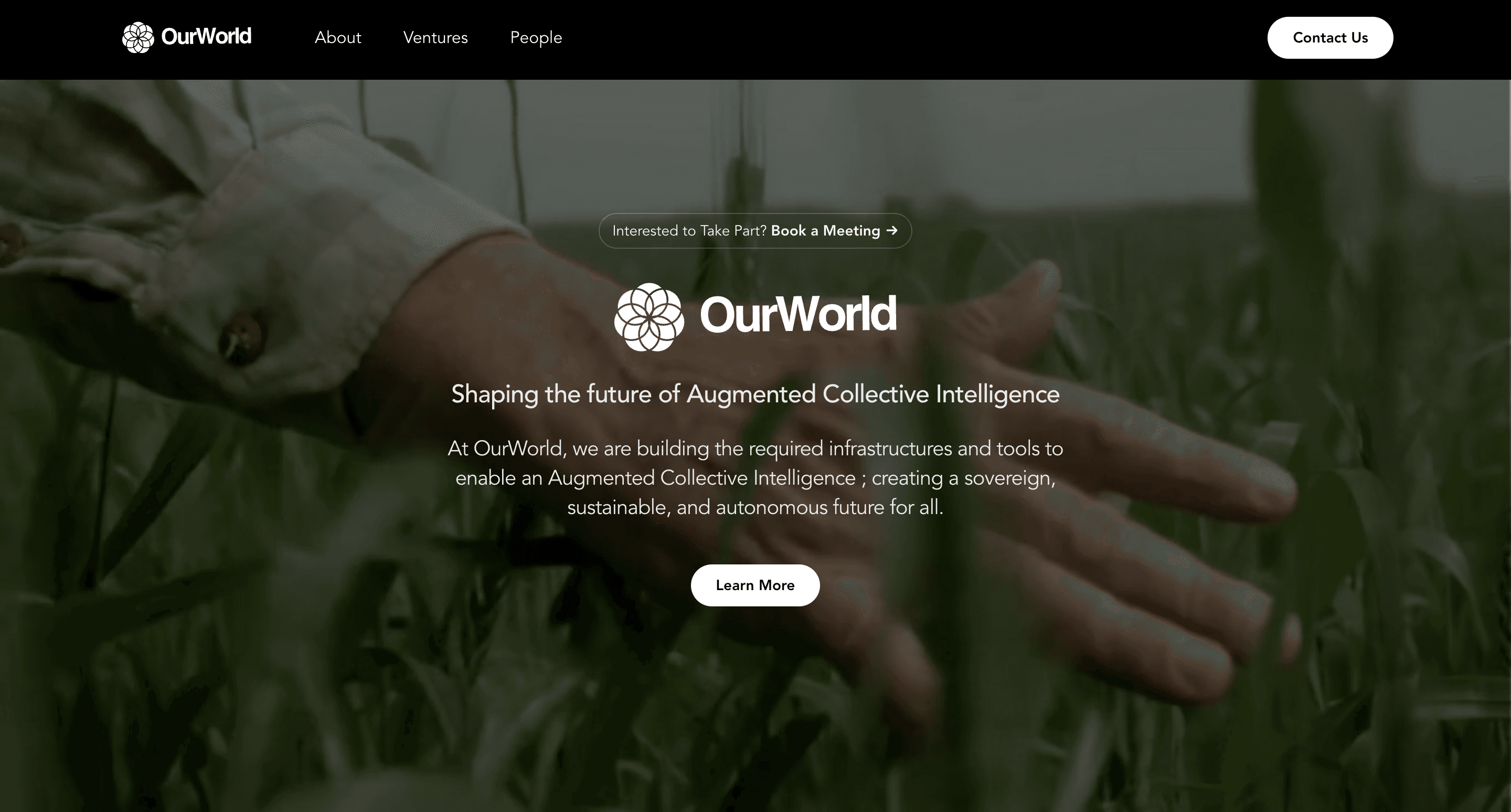
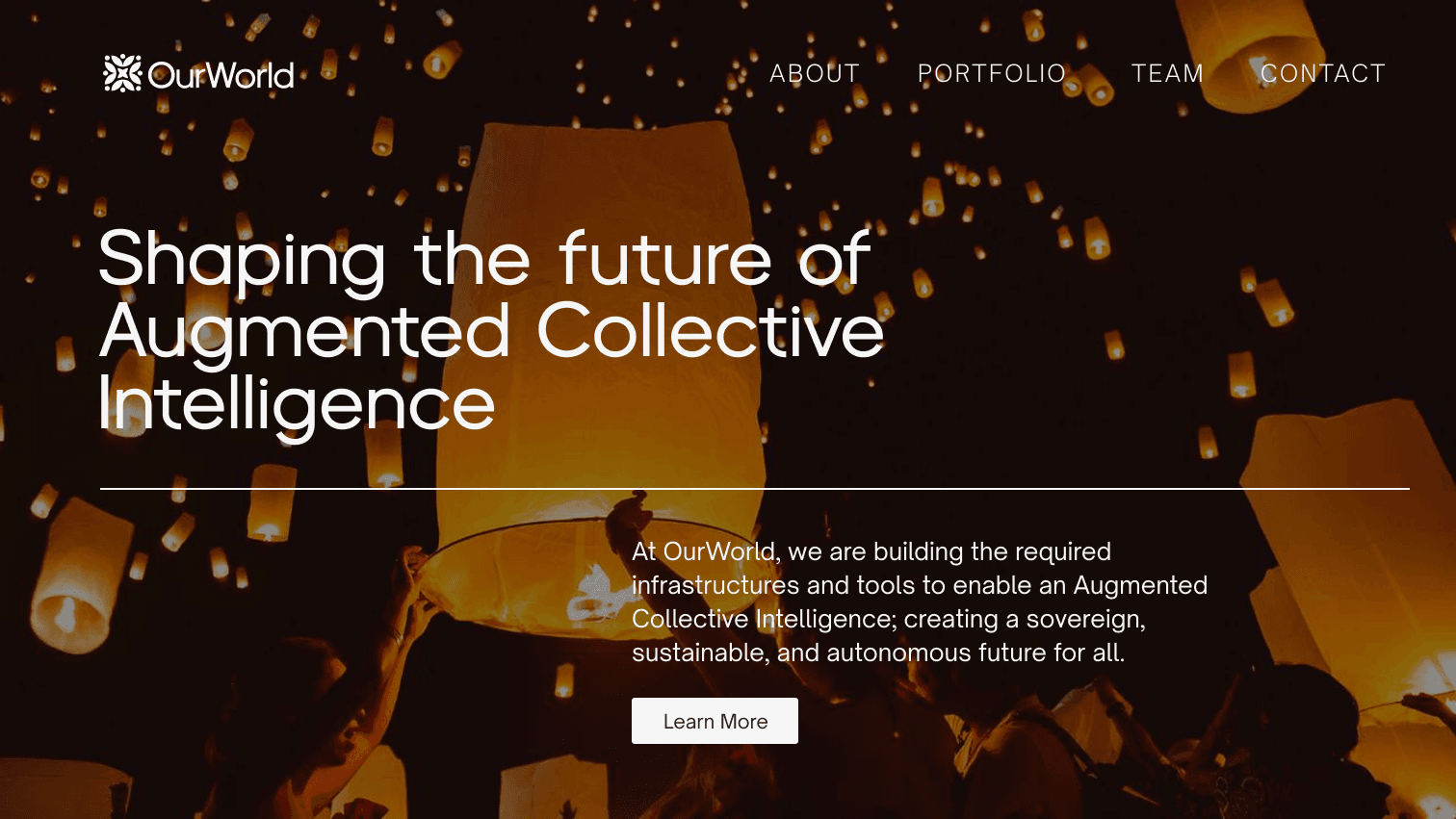
The previous visual identity relied heavily on black-and-white layouts, generic typography, and abstract representations. While functional, it lacked emotional depth and failed to convey the human and collaborative nature of OurWorld.
Key challenges included:
- A palette that felt cold, clinical, and overly minimal
- Inconsistent visual elements across pages and ventures
- An absence of real people, real activity, and real proof of work
- Limited emotional connection and low perceived trust
- Difficulty scaling the system across a growing ecosystem
The brand felt more like a static website than a living, evolving network.
Rebrand Goals
We approached the rebrand with a clear set of principles:
- Create a unified, scalable design system that can grow with the ecosystem
- Strengthen emotional trust through human-centric visuals
- Align the brand with people-first and planet-first values
- Balance technological clarity with natural warmth
- Improve readability, hierarchy, and clarity across all touchpoints
- Support future ventures, products, and global audiences
Every design decision was measured against these goals.
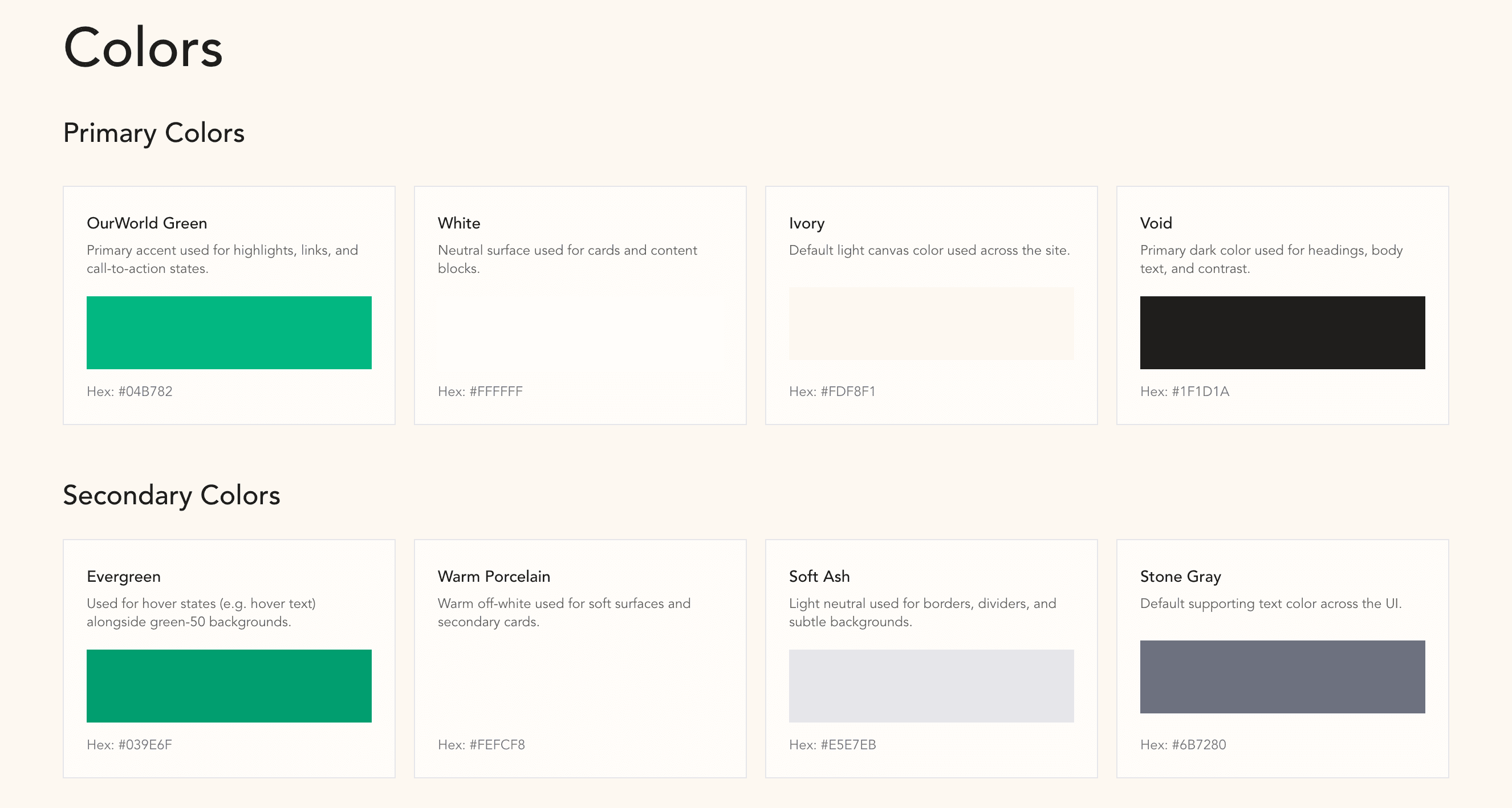
Color as Trust Infrastructure
Color played a key role in shifting perception.
The old black-and-white palette lacked warmth and struggled to support storytelling, emotional resonance, or differentiation. It felt more like a typical Web2/SaaS product than a people-driven ecosystem.
The new palette introduces warmth, depth, and clarity — bridging nature and technology while reinforcing trust and approachability across the platform.
Designing for Humans, Not Icons
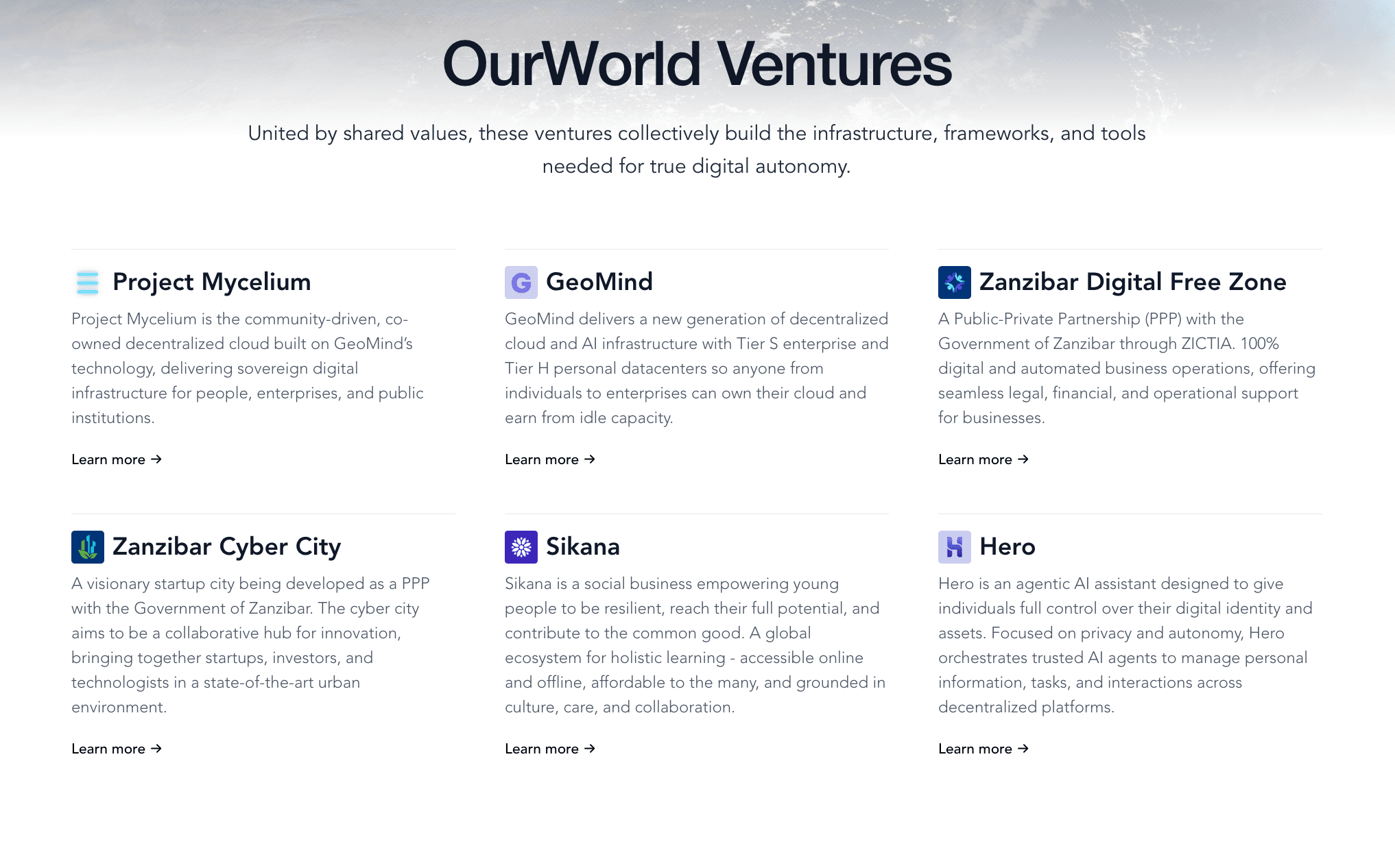
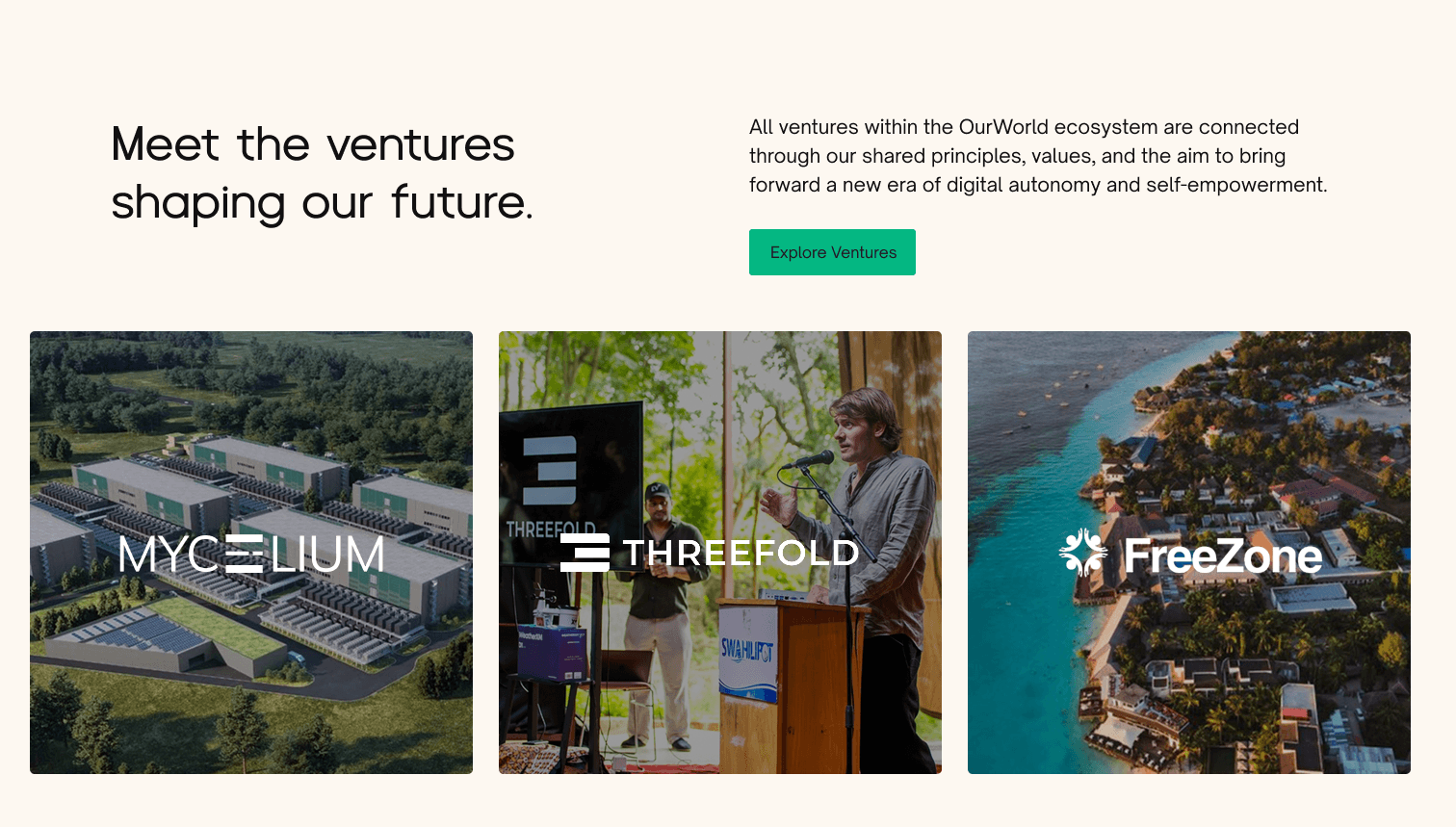
One of the most important shifts was moving away from abstract icons and generic visuals toward real imagery.
Ventures are now presented through authentic photography — showcasing real founders, teams, environments, and on-the-ground activity. This change transforms the ecosystem from something conceptual into something tangible, credible, and alive.
People are no longer decorative elements. They are the core of the brand.
Credibility Through Visibility
Trust is built through transparency.
The rebrand introduced clearer storytelling, visible progress, and stronger visual hierarchy. By surfacing real activity, real ventures, and real people, the platform now communicates credibility without over-explaining itself.
OurWorld feels active, grounded, and real — not abstract or aspirational.
Outcome
The reimagined OurWorld brand is warmer, clearer, and more aligned with who we are today — and where we are going.
It supports growth without fragmentation, trust without rigidity, and technology without losing humanity.
Most importantly, it reflects the truth of OurWorld:
an interconnected ecosystem built by people, for people.
People as the Foundation of the Ecosystem
As OurWorld grew, one issue became increasingly clear:
while people were at the heart of everything we were building, the way we presented them didn't reflect that.
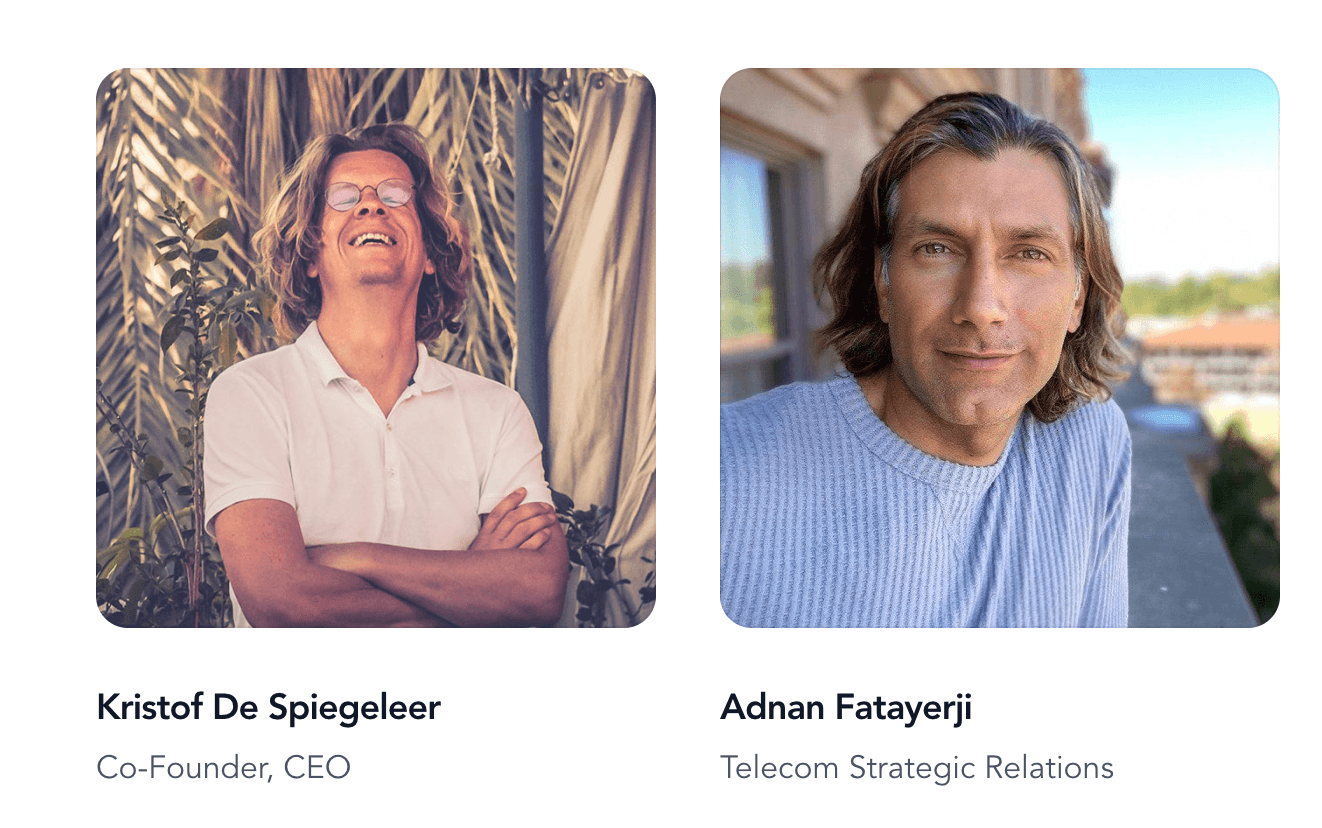
Previously, team and member profiles were visually inconsistent. Photos varied widely in lighting, backgrounds, cropping, and quality. Some felt casual, others overly formal. The result was a fragmented impression that unintentionally reduced trust and made the ecosystem feel less cohesive than it actually was.
The rebrand introduced a unified, human-centric approach to representing people across the platform.
Instead of treating team members as secondary elements, the new design places people front and center — supported by consistent framing, calmer backgrounds, and a warmer visual language. This creates clarity without erasing individuality, and cohesion without forcing uniformity.
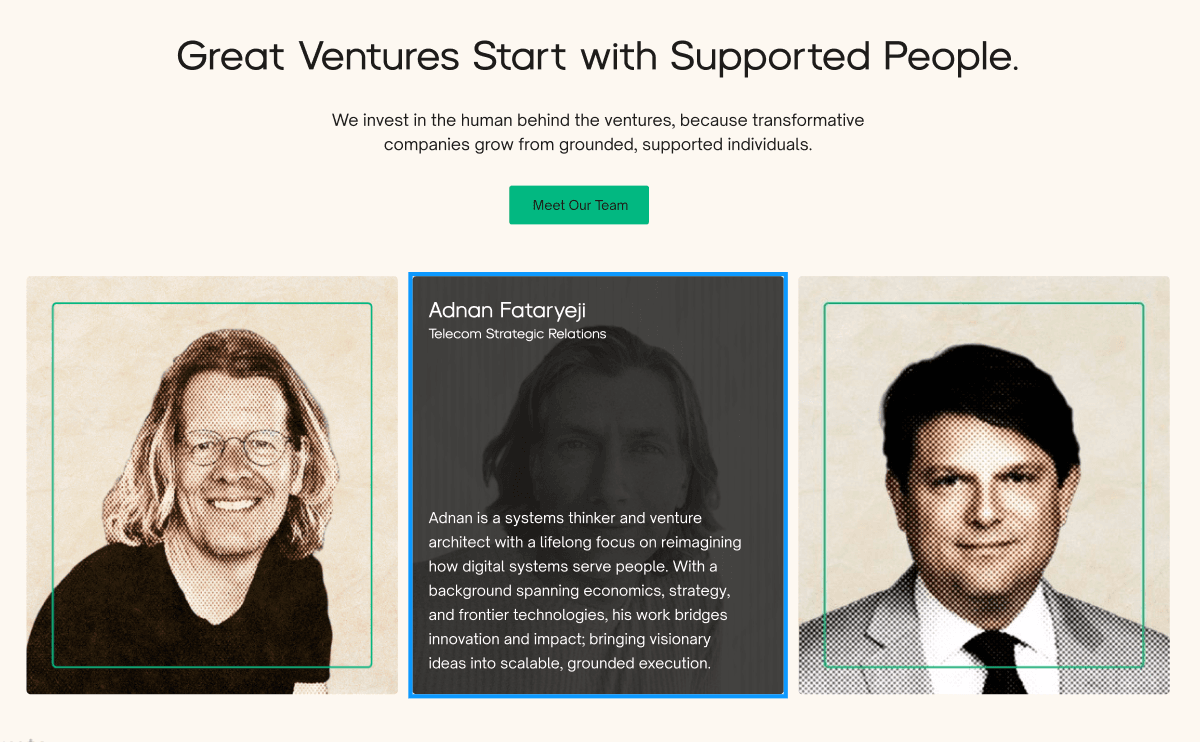
By standardizing presentation while preserving personality, the ecosystem now feels intentional, credible, and emotionally accessible. Faces are clearer. Expressions are more natural. The focus shifts from decoration to connection.
This change reinforces a core belief behind the rebrand:
great ventures don't start with ideas or technology — they start with supported people.
Looking Forward
This rebrand is not a finish line. It is a foundation.
The design system is intentionally modular, allowing future ventures, platforms, and initiatives to plug in without losing coherence. As the ecosystem grows, the brand grows with it — adapting without compromising its core values.
That was the real goal all along.